
Open to research & advisory collaboration
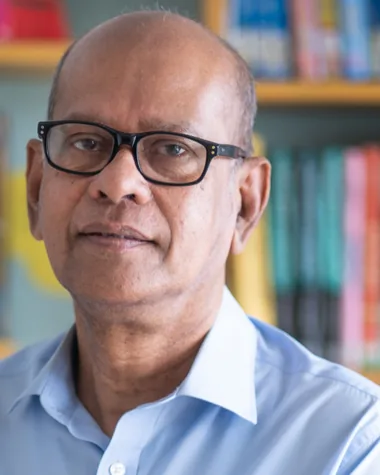
I'm Khondokar Shakhawat Ali.Research that connects policy with the people it is made for.
Three decades of policy research, teaching and advisory work in Bangladesh — on education, social protection, local governance and digital financial inclusion — with government, development partners and universities.
- Former Executive Editor, Protichinta
- Emeritus Fellow, Unnayan Shomonnoy
- Author of Mobile Financial Service in Bangladesh
- Development sociology
- Education policy
- Social safety nets
- Mobile financial services
- Financial inclusion
- Local governance
- Political settlement analysis
- Poverty research
- Qualitative methods
- Monitoring & evaluation
- Rural social change
- Civil society
- Years in policy & development
- 32+
- Publications & policy outputs
- 30+
- Years in fintech & financial inclusion
- 15+
- Books written & edited
- 8
About
I am a Development Sociologist & Policy Researcher
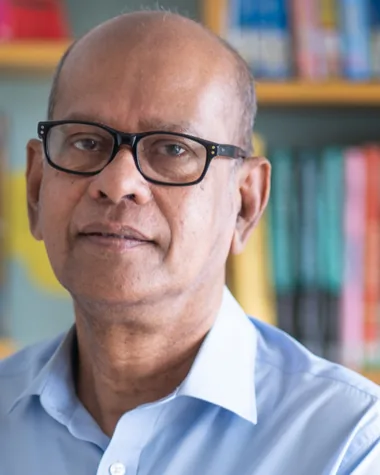
I am a sociologist, policy researcher and teacher. For three decades I have worked on how national policy in Bangladesh — on education, social protection, local government and digital finance — meets the people it is written for.
I began in 1994 as a research associate on non-formal primary schools. The questions have grown since — national education plans, safety nets, mobile money — but the method has not changed: start where the policy lands.
Selected works
Books and policy papers
Three works from three of the areas I work in — mobile financial services, social safety nets, and why education quality reform is hard. The full bibliography is on the publications page.
Book · Financial inclusion2017
Mobile Financial Service in Bangladesh
A book on mobile financial services in Bangladesh — what the sector has achieved, where its opportunity lies, and what stands in its way.
- Mobile financial services
- Financial inclusion
- Regulation
- Consumer protection
Policy review · Social protection2011
Social Safety Nets in Bangladesh
A national review of Bangladesh's social safety nets — the issues, and an analytical inventory of the programmes — prepared by PPRC with UNDP.
- Social safety nets
- Social protection
- Poverty
- Public policy
Working paper · Education2017
The Problem with Teachers
Why reforms to the quality of basic education in Bangladesh are so hard to carry through, read through the country's political settlement.
- Education quality
- Political settlement
- Governance
- Basic education
Books
Books written and edited
From a policy review of mobile money to a collection of poems.

Mobile Financial Service in Bangladesh: Achievement, Opportunity and Challenge
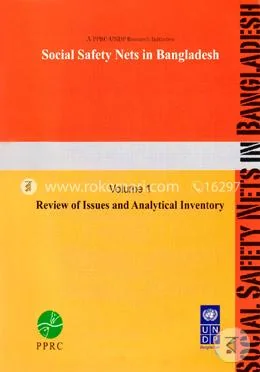
Social Safety Nets in Bangladesh, Volume 1: Review of Issues and Analytical Inventory

Researching Poverty from the Bottom Up
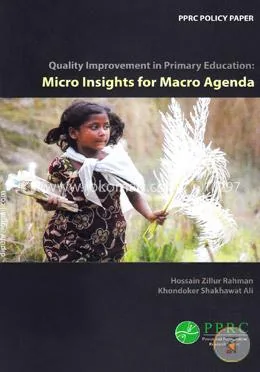
Quality Improvement in Primary Education: Micro Insights for Macro Agenda

Halkhata 2008: Annual Report on Primary Education
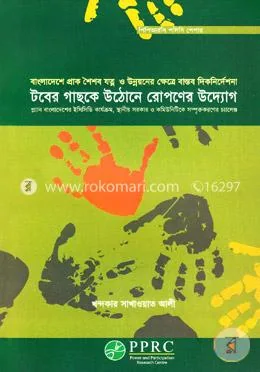
Tober Gachke Uthone Roponer Udyog
Gallery
Lectures, interviews and discussions
On television, at seminars and in the study.
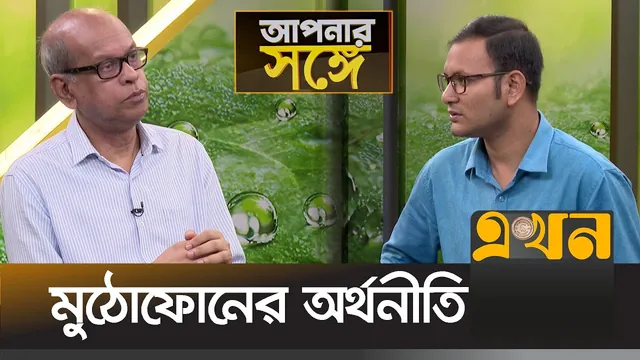
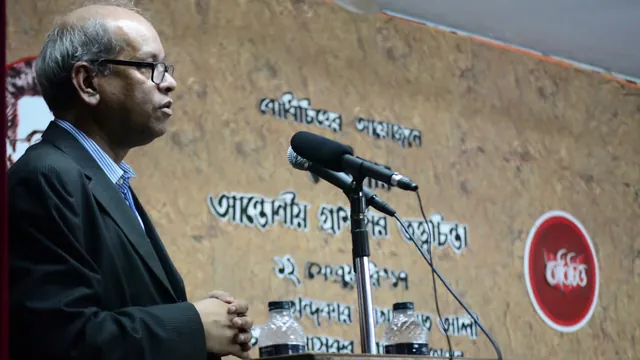
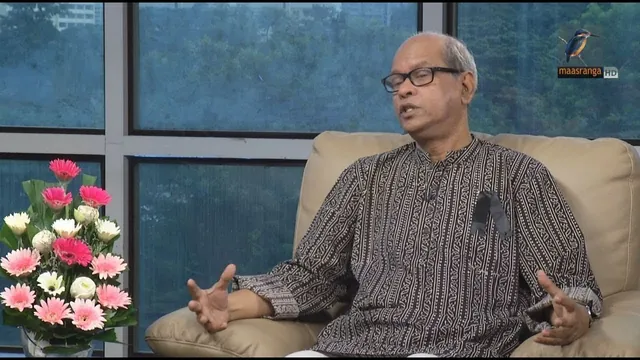
On YouTube
Lectures and interviews
A public lecture, television interviews on mobile money and health care, a seminar on Gramsci, and shorter pieces from my own channel.
Thumbnails are served from this site. YouTube is only contacted when you press play.
Khondokar Shakhawat Ali on YouTube
Lectures, talks and discussions on policy and society.
Expertise
What I work on
Eight areas, each with work behind it that has a name and a date. If your question sits next to one of these rather than inside it, write anyway.
Policy research and political-economy analysis
Research that explains why a reform does or does not travel from a policy document to the ground — designed, led and written up for governments and development partners.
Education policy and school governance
Primary and secondary education seen from both ends: the national plan and the individual school. Three decades of it, from non-formal schools in the 1990s to the Five-Year Education Plan.
Mobile financial services and financial inclusion
Digital finance treated as a question of inclusion rather than technology: who is still outside the system, and which rules and institutions keep them there.
Monitoring, evaluation and qualitative research
Evaluation built on fieldwork and participation — the method I trained in at Swansea and at IIRR, and have used ever since.
Local governance and civil society
Decentralisation, accountability and the role of citizens' organisations — as a researcher, and as an organiser of the coalitions that argued for them.
University teaching and research mentorship
Teaching at four universities since 2004, to undergraduates and postgraduates, with the classroom kept close to the field.
Editorial work and policy communication
Getting research read by the people it concerns: editing a journal, producing policy briefs, and taking knowledge out of institutions and into public view.
Working together
How a piece of work runs
The same four steps whether it is a short review or a multi-year study.
- 1
Start with the question
A message or a call about what you are trying to find out or decide, who it is for, and what already exists on it. A clear question saves more time than a long terms of reference.
- 2
Agree the scope
What the work will cover, the method, the timeline and what is delivered at the end — settled in writing before anything begins.
- 3
Fieldwork and analysis
Evidence gathered where the policy actually lands — schools, upazilas, communities, institutions — and read against what is already known.
- 4
Findings that travel
A report written to be used, and where it helps, a policy brief, a publication or a public discussion — so the findings reach the people who can act on them.
Subject areas
The full range
Grouped by field. Every line below is something I have researched, taught, evaluated or written on.
Education policy
- National education planning
- Primary & secondary education governance
- Education quality reform
- Education sector mapping
- School budget analysis
Social protection & poverty
- Social safety nets
- Poverty research
- Rural social change
- Microfinance
Financial inclusion
- Mobile financial services
- MFS regulation & interoperability
- Consumer protection
- Digital payment infrastructure
- Board-level governance
Governance & civil society
- Political settlement analysis
- Local government & decentralisation
- NGO accountability
- Human rights & governance mapping
- Civic advocacy
Research & evaluation methods
- Qualitative research methodology
- Participatory monitoring & evaluation
- Development programme evaluation
- Multi-donor evaluation frameworks
Teaching & knowledge communication
- Development studies
- Sociology & social history
- Journal editing
- Policy briefs
- Public knowledge dissemination
Approach
Four ideas the work keeps returning to
They run through the research, the teaching, the editing and the civic work alike.
From the bottom up
National policy is easiest to understand from the place it lands. Most of this work begins in a school, an upazila or a community and reasons upward from there.
Evidence first
Empirical fieldwork before recommendation. Qualitative and participatory methods are the foundation of the research, the teaching and the evaluations alike.
Research and policy in one conversation
Academic rigour and policy formulation belong together. The same findings should be able to stand in a journal and in a ministry meeting.
Knowledge is public
Research that stays inside an institution has done half its job. The journal, the policy briefs and the Gayanmela all exist to put it in front of citizens.
Questions
What people ask before writing
What do you work on?
Four areas, for three decades: education policy and school governance; social protection and poverty; local governance and civil society; and mobile financial services and financial inclusion. Across all of them the method is the same — qualitative, field-based research and evaluation, written up so that it can be used in policy.
What can I get in touch about?
Research collaboration, policy and advisory assignments, evaluations, guest lectures and teaching, editorial work, and requests to speak or comment. Write with what you are trying to find out or decide and who it is for — that is enough to start a conversation.
Which organisations have you worked with?
As a researcher: the Power and Participation Research Centre (PPRC), BRAC Institute of Governance and Development, BRAC Development Institute, Unnayan Shomonnoy, Grameen Trust and Gonoshahajjo Sangastha. On studies funded by DFID/FCDO, the World Bank, Sida, the Swiss and Netherlands embassies, the Canadian High Commission, UNDP, UNICEF and UNESCO, and for Save the Children, ActionAid, Plan International and NETZ Bangladesh. In digital finance: Nagad and the Bill & Melinda Gates Foundation.
What is your work on mobile financial services?
A book and a body of advisory work. The book is Mobile Financial Service in Bangladesh: Achievement, Opportunity and Challenge (Riverside Press, 2017), on the sector's institutional bottlenecks, interoperability and consumer protection. I have served on the Management Board of Nagad, and I advise the Bill & Melinda Gates Foundation on scaling mobile financial services and digital payment infrastructure for people who are unbanked.
Where can I find your publications?
The publications page lists everything in full — eight books and edited volumes, four book chapters, two journal articles and nine policy papers, monographs and working papers — in MLA format, followed by my essays, poetry and newspaper columns. If you cannot locate a title, write to me.
What is Gayanmela?
Gayanmela — a ‘knowledge fair’ — is a concept I introduced in Bangladesh in 2000. It is a way of opening public policy research to ordinary citizens: taking what is usually discussed inside research institutions and putting it in front of the people it is about, so that academic work and grassroots experience can meet.
Do you work in Bangla or English?
Both. I write, teach and publish in Bangla and in English, and a report or a lecture can be in either.
Where are you based?
In Gulshan, Dhaka. The research itself has been carried out across Bangladesh — in upazilas, in schools and in the river islands of the north-west — and with partners abroad, including the University of Manchester.